Installation Tips
For Air Springs
Air Spring Alignment
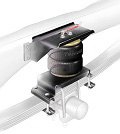
Air Spring alignment is important to the operation of your air helper spring kit. Upon installation, visually align the air spring. There is no need to use a level or other measuring device because the air springs are very forgiving, if it's off a fraction you should be fine. Most kits allow for movement of the upper and lower brackets to assist in making the air spring vertical. Position the brackets so the upper and lower brackets are parallel. The most important item to consider when placing the air spring is design height. As long as the proper design height is maintained and the air spring is as vertical as possible your kit will provide you with years of service.

Push-to-Connect Fittings
Firestone's push-to-connect fittings are extremely easy to use. Once the length of air line has been selected to span the distance from the air springs to the inflation valves simply use a sharp knife to cut the air line as square as possible (DO NOT use hand cutters or other devices that may deform the end of the air line) then push the air line into the fitting as far as possible. That's all there is to it.
Air Spring Clearance
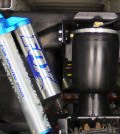
After installing your air helper spring kit make sure you have at least 1/2" of clearance around the entire air spring. A good rule of thumb is to use the thickness of your hand and feel around the entire air spring if you hand comes in contact with an object on the vehicle you may have a problem. If the object can be moved relocate it if it cannot contact Firestone for further assistance.
For Air Accessory Systems
Direct Drive Compressors
All Firestone compressors are direct drive compressors (no oil or belts). This means the compressor can be mounted in any position without detriment to the compressor.
Ignition Activation
When connecting the compressor to a hot wire on the vehicle make sure it is ignition activated. This will eliminate the compressor running when the vehicle is shut off.
Compressor Positioning
The compressors can be mounted under the hood or on the frame rail behind a cross member. Keep in mind to allow enough air to flow to the compressor and to place it in a protected area.
Preventive Maintenance
- Prior to installation, check to ensure that all minimum clearance requirements are met.
- During installation, make sure that the air spring is installed at the correct mounting height or ride height.
- After installation, inflate the air springs to 10 psi and maximum pressure (see installation manual) to ensure that there is at least a 1/2 inch of clearance around the air spring (non-Coil-Rite applications). A good way to check the clearance is to move your hand around the air spring. If it touches anything, the air spring will most likely touch it as well. If nothing touches your hand, the air spring has enough clearance.
- After installation, inflate the system to 10 psi and using a soapy water mixture, check for air leaks. Recheck for leaks at maximum pressure (see installation manual). If a leak is detected, correct the problem before using the vehicle.
- Once you have ensured that there are no leaks in the system, check pressure monthly to maintain the minimum pressure. DO NOT drive a vehicle without pressure in the air springs.
- Measure the distance between the air springs and the closest heat source. If the measurement is 6” or less, a heat shield will be required.
- Prior to loading the vehicle, measure the distance between the fender opening and the ground. After the vehicle is loaded, inflate the air springs until the vehicle is back to the unloaded height using the measurement taken while the vehicle was unloaded. DO NOT exceed the maximum operating pressure outlined in the installation manual.
- Periodically check for rocks, gravel, sand or other abrasive debris between the convolutions, around bead plates and around pistons. Remove the debris to help prevent abrasive punctures.
Cleaning
Although it is not necessary to clean the air springs, it is acceptable to do so if desired. The following are approved and non-approved means of cleaning an air spring.
APPROVED: Approved cleaning media are soap and water, methyl alcohol, ethyl alcohol and isopropyl alcohol.
NON-APPROVED: Non-approved cleaning media include all organic solvents, open flames, abrasives and direct pressurized steam cleaning.